¡Tu carrito está actualmente vacío!
How Canadian Players Can Sort Online Slots by Style

Choosing among thousands of titles can make a casino lobby feel less like a menu and more like a catalogue. The most useful approach is to narrow games by format, pace, theme and level of interaction before considering individual titles. The spinsy online casino lobby is designed around search, categories and provider filters, giving Canadian players several ways to reach suitable games without relying only on whatever appears first. This guide explains how to use those discovery tools and what to look for when comparing slots with other casino formats.
Begin with the type of session you want
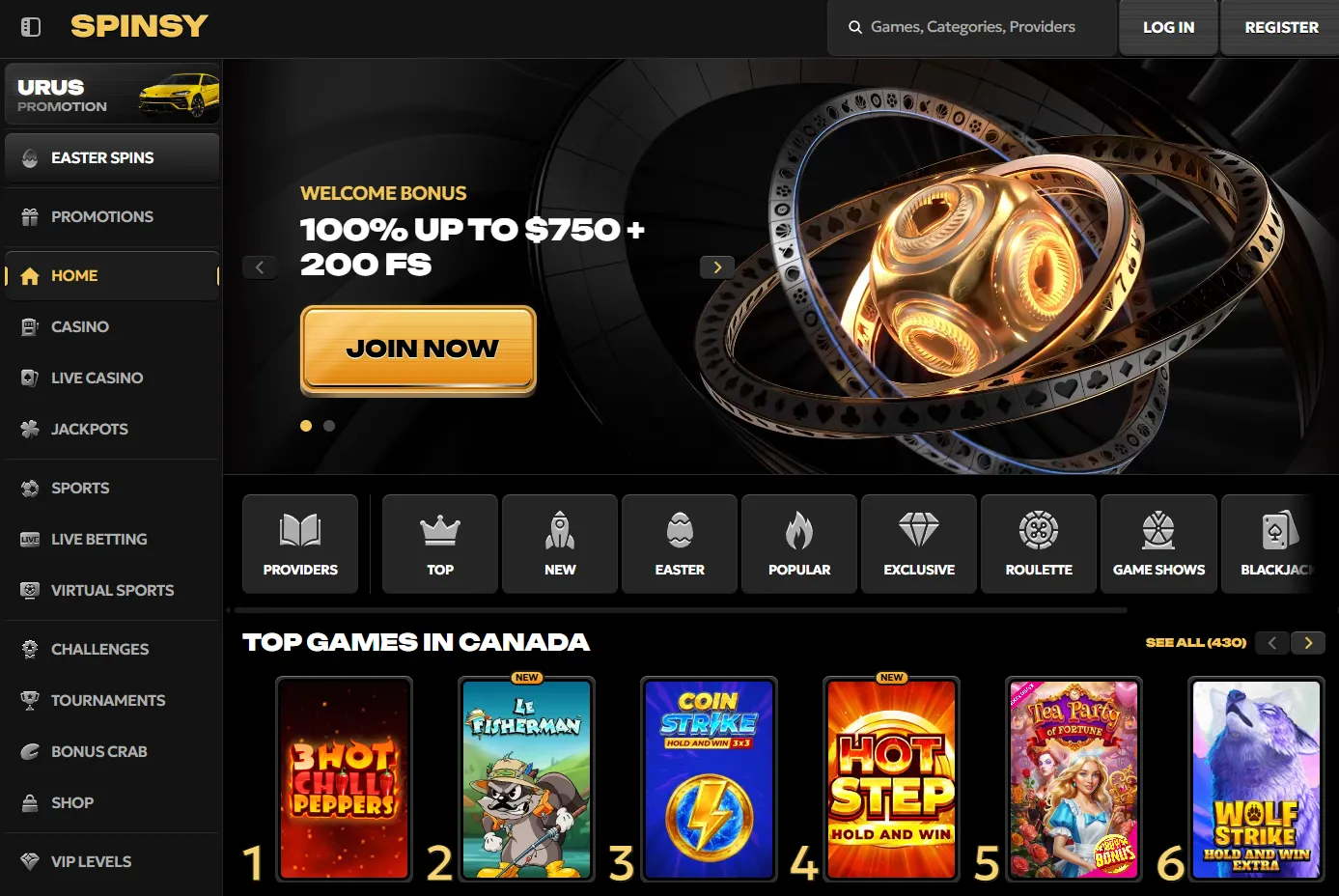
Game choice is easier when it starts with the intended session rather than a provider name. Someone looking for a quick, simple round may prefer an instant game or a straightforward slot, while another player may want a longer session with bonus features, expanding symbols or several decision points. Categories such as Top, New, Popular and Exclusive can help with browsing, but they describe how a lobby presents games rather than whether a title suits a particular preference.
Slots are often the broadest category because they combine different reels, themes and bonus structures under one label. Some games are visually simple and move quickly, whereas others build around free spins, multipliers, cascading symbols or progressive-style prize mechanics. A title’s appearance does not reveal its likely pace or risk profile, so read the information shown in the game window and its rules before treating a short trial as meaningful evidence about performance.
It is also worth separating entertainment preferences from spending decisions. A colourful theme, a large advertised prize or a prominent “popular” label should not be treated as a reason to increase a stake. Decide the amount and time for the session independently, then use the lobby to find a game within those boundaries. This keeps discovery focused on format and enjoyment rather than turning presentation into a prediction of results.
Use filters to reduce a large slots catalogue
Search is useful when a player already knows a game title, but category and provider filters are more helpful when the goal is exploration. A practical sequence is to select Slots first, narrow by a broad category such as New or Popular if desired, and then review the remaining titles one row at a time. This avoids opening every game in a large catalogue and makes it easier to compare similar presentations.
Provider filters can add another layer of organisation. The Canadian lobby lists studios including Hacksaw Gaming, Amusnet, BGaming, Booongo, Spinomenal, Yggdrasil, Evoplay, Playson, EGT Digital and AvatarUX, among others. A provider can be a useful shortcut for finding familiar design conventions, but it is not a guarantee that every title from that studio has the same volatility, feature structure or betting range. Treat the provider as a filing system, not a quality score.
Many listed titles support demo play, which can be useful for learning the controls and identifying whether the pace or visual style is comfortable. Demo play cannot establish future results, prove a return rate or show how a game will feel over a longer session. Before selecting real-money play, check the displayed rules, paylines or ways to win, bonus conditions and any available stake controls. If information is unclear, choose another title or ask support for clarification.
Compare slots with other casino formats
A slot is not automatically the best match for every kind of player. Table games provide a different structure, with categories such as roulette, blackjack, baccarat and dice. These games may appeal to people who prefer recognisable rules and fewer visual elements, although the pace and decision-making demands vary considerably between formats. A table-game label therefore deserves the same careful inspection as a slot title.
Live casino adds a streamed or hosted setting, with international tables, poker, game shows and sections such as Gold Saloon. Examples named in the catalogue include Crazy Time, Mega Ball and Deal or No Deal. These formats can feel more social and interactive than a standard slot, but they may also encourage longer sessions because events unfold continuously. Set a stopping point before joining rather than waiting for a natural pause that may never arrive.
Instant games and jackpots occupy other parts of the discovery process. Instant games are generally presented as quick, accessible experiences, while jackpot sections emphasize prize mechanics rather than one particular visual style. Sports betting and virtual sports are separate products, not substitutes for casino games, even when they appear in the same account area. Keeping these formats distinct helps prevent a browsing session from drifting into a different type of gambling without a deliberate decision.
Read game information before choosing a title
Once a shortlist has been created, inspect each game’s information panel rather than choosing solely from its thumbnail. Look for the rules, winning combinations, special symbols, bonus rounds and any stated return-to-player or volatility information. These details help explain how a title is designed, but none of them predicts the result of the next spin. A high advertised prize also does not mean that a game is more likely to produce a win.
Pay attention to the difference between a game’s maximum feature and its ordinary play. A title may promote a large multiplier, jackpot possibility or elaborate bonus round that appears only under specific conditions. Understanding those conditions prevents a player from assuming that every spin has the same opportunity. If the rules mention changing symbols, buy features, bonus purchases or variable stake settings, make sure those options are understood before they are selected.
Independent information can also help with broader gambling literacy. For Canadian readers, the problem gambling information from CAMH explains how gambling can become difficult to control and why warning signs matter. That general guidance does not assess any particular game or operator. It is best used alongside practical habits such as setting a session budget, taking breaks and avoiding the belief that losses create a reason to continue.
Make a shortlist that fits your limits
A useful shortlist contains more than one title and reflects different reasons for choosing each game. For example, one slot might be selected for simple controls, another for its theme and a third for a slower bonus structure. Keeping the list small reduces repeated searching and makes it easier to stop when the planned session ends. If a title feels confusing, overly stimulating or difficult to leave, it does not belong on the shortlist.
Before playing, confirm the stake setting and decide whether the session will use one fixed amount or a pre-set range. Do not raise the stake to recover a loss, and do not treat free spins, rewards or promotional balances as risk-free money. Promotional terms can include wagering requirements, expiry periods and game restrictions, so read the current terms shown in the account before activating anything. If the conditions are not clear, do not assume how they work.
Finally, review the shortlist after a few sessions based on control and comfort, not on whether a title happened to win. A game that produces a short-term gain may still be unsuitable if it encourages impulsive play, while a game that loses may not have been “due” to win. The strongest discovery method is repeatable: filter by type, inspect the rules, choose within a limit and stop at the planned time.
Questions Canadian players often ask
Can demo play show whether a slot is worth playing?
Demo play can show the controls, layout, bonus presentation and general pace. It cannot establish whether a title will win in real-money play, confirm long-term returns or predict the next result. Use it as a way to understand the game, then review its rules and choose a stake that fits your limit.
Are provider filters a reliable way to find better slots?
Provider filters are useful for locating games with familiar visual or mechanical styles, but they do not identify a universally better option. Titles from the same studio can differ in volatility, features, theme and stake range. Compare each game’s own information instead of treating a provider name as a recommendation.
Should a popular or new game be the first choice?
Popular and new labels can make browsing faster, but they are presentation categories rather than evidence of suitability. A new title may be unfamiliar, while a popular one may not match your preferred pace. Use those sections to generate options, then select only after checking the rules, controls and session budget.